
Timber assessment
Identify the floor construction, condition, previous finishes and any areas that need repair.
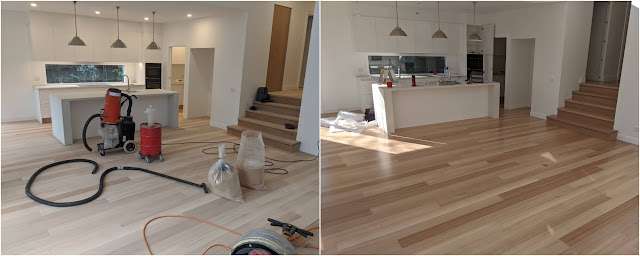
Timber restoration and finishing
Restore worn timber, refine the colour and protect the finished floor. We assess the existing boards, explain the preparation and help you choose a finish that suits the timber and your space.
A considered restoration
Sanding removes the worn surface and prepares the timber for a new finish. The result depends on the boards beneath, the existing coating, repairs, colour choice and the way the rooms connect—so every project starts with an assessment.
Identify the floor construction, condition, previous finishes and any areas that need repair.
Plan board repairs, edges, floor levels and access before the main sanding stages begin.
Compare natural, stained and whitewashed looks with the timber species and room light in mind.
Choose sheen and finish characteristics for the desired appearance, use and maintenance.
The process
Review the timber, floor condition, access and the finish you want to achieve.
Confirm repairs and preparation, then ready the rooms and floor for sanding.
Work through the sanding stages to remove the old surface and refine the timber.
Apply the selected colour and finish system, following its drying and care requirements.
Melbourne floor sanding projects
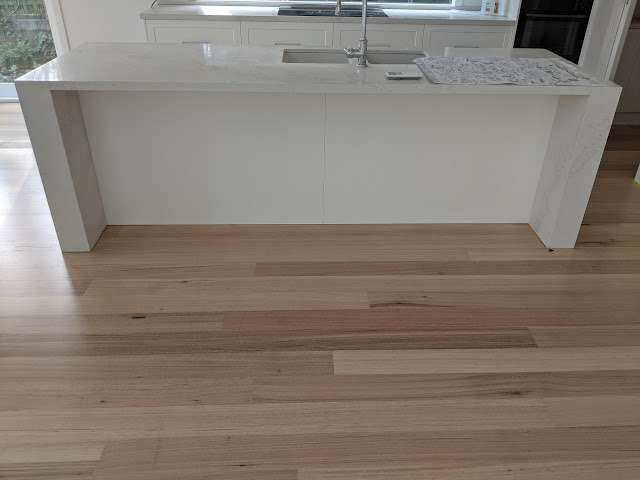
Essendon
A pale finish that softens the timber tone while keeping the natural grain visible.
View projectEssendon
See the sanding stage and finished result across a bright open-plan interior.
View project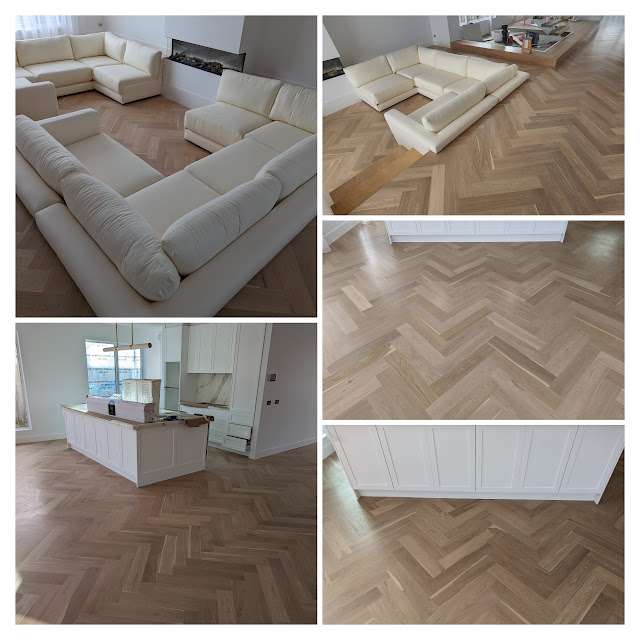
Balaclava
A patterned oak floor finished in a light tone for a calm, contemporary home.
View projectUnderstanding your quote
A useful quote is based on the actual floor, not a one-size-fits-all rate. These details shape the work required and the final result.
Frequently asked questions
Many solid timber floors can be sanded, but the remaining board thickness, previous work, damage and floor construction must be assessed first. Engineered floors require particular care because the timber veneer has a limited thickness.
The schedule depends on the floor area, condition, repairs, selected finish and drying or curing requirements. We confirm the expected stages after assessing the project and chosen finish system.
Often, yes. Stains, whitewash and other finish systems can alter the appearance, but the result depends on the timber species, existing coatings and sample testing. Natural variation will remain part of the floor.
Loose, badly damaged or unsuitable boards may need attention before the final sanding and coating stages. An assessment identifies repairs and preparation that should be included in the scope.
Consider the timber, desired colour and sheen, expected traffic, maintenance preferences and the room itself. Viewing relevant project examples and testing samples helps narrow the choice.
The main factors include the floor area and condition, existing coating, repairs, stairs and edges, access, finish system and the number of preparation and coating stages required.
Share the floor area, timber type if known, suburb, condition and a few photos. We can then discuss the next step.
Floorboards Melbourne showroom
2 Tampe Road, Rowville VIC 3178